The 5-Day Smile Makeover: Dental Veneers in Europe
Most people never think much about their teeth until something goes wrong.
Then it becomes surprisingly hard to think about anything else.
A chipped tooth, discoloration, or uneven smile doesn't usually cause pain at first. But it slowly changes how a person behaves. Smiling becomes more controlled. Photos feel less natural. Conversations feel slightly more guarded.
It's not a dramatic change.
It's a quiet one.
And that's how dental problems affect people long before they ever sit in a clinic chair.
The Problem Nobody Talks About Loudly
A chipped or discolored tooth doesn't announce itself with drama. It simply changes behavior.
A person begins smiling a little less in photographs. Then a little less in conversation. Then, eventually, they discover they've developed what might be called a closed-mouth personality.
It's not depression. It's not vanity.
It's adaptation.
Cosmetic dentistry exists because humans are very good at adapting to problems - and sometimes very slow to remove them.
Among the most transformative treatments in modern dentistry are affordable dental veneers abroad, thin ceramic shells bonded to the front surface of teeth to improve shape, color, and symmetry.
They're not artificial teeth. They're refinements of existing ones.
And in recent years, they've become part of a broader trend: the five-day smile makeover in Europe, where full aesthetic transformations are completed in a short, structured treatment window.
What Dental Veneers Actually Do
Dental veneers are ultra-thin ceramic shells designed to correct:
- Discoloration resistant to whitening
- Minor misalignment
- Chipped or worn enamel
- Uneven tooth shape
- Gaps between teeth
Modern dental ceramics have improved significantly in strength and aesthetics, with materials engineered to mimic the light-reflecting properties of natural enamel.
Dentists often compare different ceramic systems based on strength and translucency, depending on whether function or aesthetics is prioritized.
But patients rarely ask for materials first.
They ask for outcomes.
They ask quietly:
"Will I finally like my smile?"
The Five-Day Structure and Why It Exists
The idea of a smile makeover completed in roughly a week is not a shortcut. It's a sequencing of modern dental workflows.
A typical dental veneers process includes:
- Consultation and digital smile design
- Tooth preparation when needed
- Temporary restorations
- Laboratory fabrication of veneers
- Final bonding and adjustment
Digital scanning and CAD/CAM technology have significantly reduced turnaround times compared to traditional methods, allowing clinics to coordinate treatment efficiently within short travel windows.
For international patients, this structure matters.
It means treatment can be planned around travel rather than stretched across months of visits.
Before Treatment: The Quiet Cost of Avoidance
Before treatment, patients often describe problems that don't appear in clinical charts.
They talk about photographs they avoid.
Meetings where they speak less than they want.
Social situations where they calculate how much of their teeth should be visible when laughing.
It's not pain that brings most patients into clinics.
It's awareness.
Awareness that something small has been influencing behavior for years.
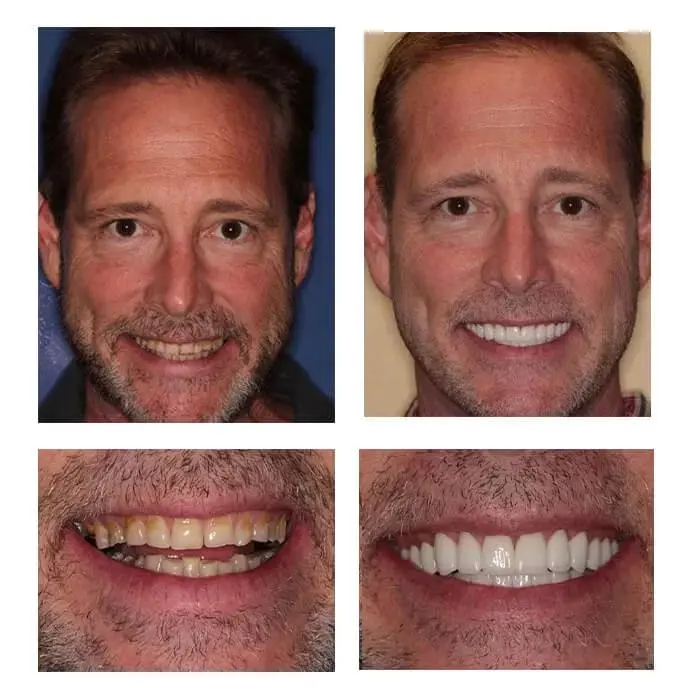
After Treatment: The Oddly Simple Transformation
After treatment, something subtle happens.
Patients don't usually describe dramatic life changes.
They describe normal ones:
- Smiling without thinking
- Speaking without hesitation
- Feeling more put together
- Noticing their teeth less, not more
That last point is important.
Good cosmetic dentistry is often invisible in daily awareness. It stops being something the mind monitors.
In that sense, success is not attention. It's the absence of attention.
Why Europeans Travel for Treatment
Across Europe, more patients are choosing to travel for dental aesthetic treatments.
Not because dental veneers are unavailable locally, but because:
- Treatment costs vary significantly between countries
- Scheduling can be faster in international clinics
- Digital workflows support coordinated short-term treatment plans
- Patients prefer structured all-in-one experiences
This is part of a broader shift in healthcare mobility.
Patients are no longer limited to local options. They compare systems.
And increasingly, they choose based on value, speed, and expertise rather than geography alone.
Albania and the New Dental Route
One of the emerging destinations in this landscape is Albania, where modern dental clinics have expanded rapidly and international patients are increasingly seeking treatment.
For many patients, the appeal is not just cost efficiency, but the ability to access organized treatment planning in a single travel cycle.
Understanding the broader cost structure of care is often the first step.
Resources such as this guide to dental costs in Albania help patients contextualize treatment planning across different procedures and materials.
Within this system, dental veneers are often part of a larger continuum of care rather than isolated procedures.

Choosing Dental Veneers: What Actually Matters
Patients often begin with questions about appearance.
But good clinical planning begins elsewhere.
Key considerations include:
- Enamel condition — important for bonding strength
- Bite alignment and pressure distribution
- Gum health
- Material selection depending on case requirements
- Long-term maintenance expectations
Dental veneers are durable, but they're not indestructible. Like natural teeth, they benefit from care, hygiene, and periodic evaluation.
The best outcomes are not the whitest smiles.
They're the most stable ones.
The Role of Treatment Coordination
For international patients, the clinical procedure is only part of the process.
Logistics matter:
- Consultation scheduling
- Treatment sequencing
- Travel timing
- Communication between patient and clinic
This is where coordinated care becomes important.
Services such as Alba Med Health help patients navigate these steps by organizing consultations, aligning treatment plans with travel schedules, and supporting communication with dental providers throughout the process.
In many cases, this coordination is what makes a compressed treatment timeline possible.
A Final Thought
There's an old observation that humans are creatures who can endure almost anything except embarrassment.
He may have been exaggerating.
But in dentistry, there's a quiet truth inside the humor.
Most people do not seek dental veneers because they are in pain.
They seek them because they are tired of thinking about something that should not require thought at all.
A smile is supposed to be the least complicated part of a person.
When it stops being that - even slightly - life becomes more self-conscious than necessary.
Dental veneers do not change who a person is.
They simply remove a small, persistent negotiation between identity and appearance.
And sometimes that's enough to make a face feel like home again.
More to Read:


Previous Posts: